
The Banality of Being Wrong: Truth-Telling vs. Trolling
Separating sludge from substance to summon our inner Socrates and acknowledge that the unexamined reading method is not worth teaching

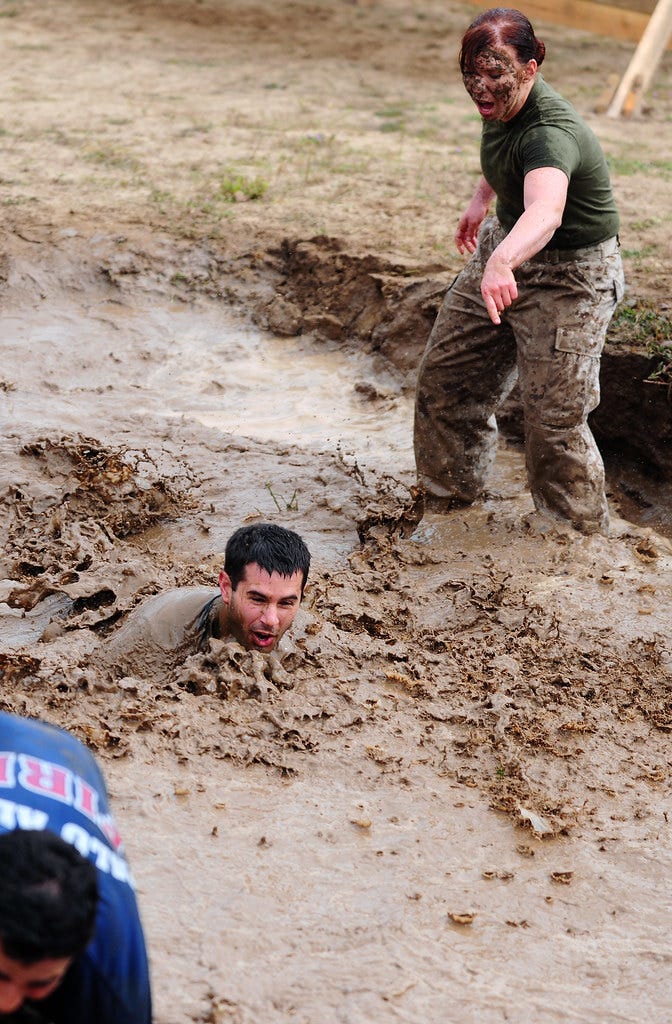
The Cost of Compliance vs. the Cost of Defiance
In The Science of Reading: A Call to Action or a Cash Cow, I refer to Elena Aydarova, a social foundations professor (Auburn University) who is concerned about the excesses of the Science of Reading (SOR) movement. However, she is able to distinguish between what she sees as overreactions to reading research—and the overreach of the movement itself—while still embracing the core of reading science, and she cites researchers like Mark Seidenberg and Maryanne Wolf as trustworthy sources of information. She is decrying the excesses of the movement and defying the call for mandates while embracing the legitimacy of reliable researchers in the field of reading science.
In a recent podcast discussion of the new book Defy: The Power of No in a World that Demands Yes, Cornell psychology professor Sunita Sah makes the case for not complying with what you believe to be wrong. Standing up and speaking out is to be valued, she asserts, not vilified.
Even before coming across this advocacy for defiance, I had been astounded to discover the perceived preciousness of professors as expressed through the statements of one of my commenters. Repeatedly, he chastises me for a lack of deference to literacy professors when they refuse to cite evidence supporting their claims so that we can judge their credibility. Some of these claims are outlandish, some out in left field, and some just run-of-the-mill wrong—but all of these assertions are fair game for analysis and subject to a reasonable request for professors to provide research to support their positions if they are to be taken seriously.
In the podcast, Sunita Sah refers to the agentic state:
[In the agentic state] we have become agents of somebody else; we have given away all our responsibility and our power to someone else. Whatever they want, we are going to do, and we’re going to comply. It might be because we think they’re an authority figure and know best, but sometimes we know best, and yet we give that away so easily.
Mud Moats
My commenter is specifically concerned that I am trolling when I ask Whole-Language education professor Andy Johnson (Minnesota State University) to provide research to support his claims. Recently, he posted a piece, How much phonics should be taught in kindergarten, which led me to ask what I always ask: Can you please cite the research supporting your methods?
I admit that since Dr. Johnson started his Substack, this question has been a recurring one. After giving an example of how I teach phonics to kindergartners and providing research to support my approach, I believe that asking him to provide similar support for his methods is not unreasonable given the nature of his post.
While engaging in this exchange about my perceived demands, I came across an unrelated blog by economist Noah Smith outlining the importance of supporting claims with the most relevant research—just two seminal papers. It was as if he’d been reading our thread related to the 3-cueing system where, indeed, when I asked for one or two research articles that supported Dr. Johnson’s position, he posted his entire bibliography for his forthcoming book. This flooding of the zone is exactly what Smith is trying to guard against. He writes:
If you want me to read the vast literature, cite me two papers that are exemplars and paragons of that literature. Foundational papers, key recent innovations – whatever you like (but no review papers or summaries). Just two. I will read them.
If these two papers are full of mistakes and bad reasoning, I will feel free to skip the rest of the vast literature. Because if that’s the best you can do, I’ve seen enough.
If these two papers contain little or no original work, and merely link to other papers, I will also feel free to skip the rest of the vast literature. Because you could have just referred me to the papers cited, instead of making me go through an extra layer, I will assume your vast literature is likely to be a mud moat.
And if you can’t cite two papers that serve as paragons or exemplars of the vast literature, it means that the knowledge contained in that vast literature must be very diffuse and sparse. Which means it has a high likelihood of being a mud moat.
Truth-Telling vs. Trolling
From my commenter:
Ask yourself why you keep trolling whole language professors on Substack, trying to convince them that you're right and they're wrong, writing long essays about how they don't answer questions in the ways you want them to.
I must commend my commenter for his fierce defense of a professor he deeply respects because I know what this kind of protectiveness of someone you look up to professionally feels like. But what he refers to as trolling, others might just call the definition of insanity: repeatedly asking questions when hope for a productive conversation should have long since faded.
More important are two other accusations from my commenter related to the Dunning-Kruger effect and epistemic trespassing. Let’s dissect these.
The Dunning-Kruger effect is:
a cognitive bias where people with low ability in a task overestimate their competence.
In my case, my competence in reading instruction has been demonstrated through my deliberate choice of reading methods aligned to established research, and I have documented the efficacy of these methods through the performance of my students.
The Dunning-Kruger effect stems from:
a metacognitive deficiency: incompetent individuals lack the self-awareness to recognize their own shortcomings.
I believe that a refusal to engage with the research supporting one’s methods is in fact indicative of a lack of self-awareness regarding the rationale for those chosen methods.
Indeed, at the end of my instructional guide (From Sound to Summary: Braiding the Reading Rope to Make Words Make Sense), I include in one of the appendices The Practitioner’s Predicament: What Do I Teach and How Do I Teach It, where I offer research supporting the choices I’ve made for various instructional methods related to beginning reading instruction.
Clearly, my commenter and I have different interpretations of a professor’s obligation to engage in a discussion that examines the research supporting chosen approaches, a discussion that separates sludge from substance.
Dr. Johnson is a public figure publishing books and a Substack as well as making videos, so as far as I’m concerned, his claims are fair game. Each and every assertion he makes is subject to strict scrutiny if he wishes to be taken seriously. If feathers are so easily ruffled, then these professors are in the wrong profession and should consider flying the coop.
In When Teacher Training Feels Like a Sales Pitch (and How to Push Back), researchers Jim Hewitt and Nidhi Sachdeva offer valuable tips for pushing back under the circumstances I have described. They write:
If something feels off, it’s both reasonable and useful to ask clarifying questions that keep the conversation grounded:
‘Can you share the study?’
‘What kind of research are you referring to? Is it experimental, correlational, theoretical? How strong is the evidence?’
‘Was this tested in real classrooms with students like mine?’
You don’t need to be a researcher yourself to ask these questions. Curiosity and a little critical thinking go a long way.
The reason why something usually feels off about Dr. Johnson’s posts is because he writes from the perspective of a Whole-Language professor. He presents many points of view that are part of Ken Goodman’s original theory, one that has not survived close scrutiny over the last few decades.
More from Hewitt and Sachdeva:
When a method is presented mainly through theory, ask questions that connect it back to evidence:
‘Has this theory been tested in classrooms with students like mine?’
‘What does the research say about whether this practice improves retention and transfer?’
‘Are there multiple studies supporting this, or is it mostly speculative?’
Theories can inspire and guide. But evidence should lead the way. Strong professional development doesn’t recommend practices on the basis of theory alone. Rather it connects theory to evidence, helping teachers see both ‘what works in practice’ and ‘why.’
What am I failing to understand about this issue? What is my commenter seeing that I’m not seeing? Are professors a protected class? Yes, they deserve to be treated with common decency—of course they do!—but I do not see asking for evidence to support a claim as being disrespectful. Is there something special about who they are and what they do that places them beyond reproach?
Truth-Telling vs. Trespassing
Interestingly, my perceived interrogation of these professors has been interpreted as epistemic trespassing, which is defined as occurring when a genuine expert in one field oversteps into another domain, yet still offers authoritative pronouncements as if they possessed the necessary expertise.
This is a truly bizarre accusation. Literacy professors and I are in the same field: literacy in general and reading instruction in particular. We should be able to make claims and support those claims with research. In fact, it is incumbent upon us to do so. This isn’t philosophizing; it’s fulfilling an obligation to support a simple statement.
So the accusation seems more closely related to insubordination as stated here by my commenter:
But when you tried to turn the exchange into a debate (like you were qualified to debate her or that you were justified in demanding a debate from her), I'm not surprised she didn't respond in kind.
The underlying implication is that I am just a lowly reading specialist with the unmitigated temerity to think I might know a thing or two that these professors don’t. But this is a stance that is anathema to intellectual advancement in a field that should be informed by both research and practice. The problem is that many Whole-Language proponents don’t appear to be interested in whether their methods have stood the test of time, methods that rely on philosophical principles, some of which fly in the face of science. Apparently, this philosophy is so sacred and beyond reproach that any challenge to it is taken as trolling.
Actually, this seems to be an issue more closely related to credentialism: belief in or reliance on academic or other formal qualifications as the best measure of a person's intelligence or ability to do a particular job. Because my credentials are different from the professor’s, it is an affront to his PhD pedigree to be peppered with questions by an underling. Data journalist Nate Silver recently posted that there’s a specific vulnerability in the progressive ecosystem where you can get away with anything if you have a PhD. This was the first time I’d heard this claim. If accurate, it might explain the pumped-up egos of some academics who bristle at being challenged as well as the reluctance by their followers to initiate any kind of challenge.
I certainly don’t view underlings at my school like that. I want teachers who lack my reading specialist credential to challenge me based on both their experience and expertise as evidenced by their time in the classroom as well as their knowledge of best practices.
And while I don’t know the credentials of my commenter, if he lacks a reading specialist credential, does that disqualify him from questioning my methods? I for one welcome this type of exchange. I have no interest in pulling rank, and I certainly don’t want to pull the wool over anyone’s eyes with fluffy ideas and ideals related to reading instruction that are untethered from the research-based reality.
Quacksperts and Eduquackademics: Evidence-Based or Eminence-Based?
In Eminence-Based Education or the Terror of Famous & Shameless Eduquacks, Paul Kirschner and Mirjam Neelen liken education to medicine and explain how eminent authorities make judgments based on opinions rather than evidence.
People in general have a tendency to believe that such eminent notables have tons of knowledge and wisdom and that, hence, their opinion on a certain matter is sufficient to justify a clinical decision. Oftentimes, we think that such an ‘authority’ or ‘expert’ knows more than anyone else and is therefore credible. However, it’s critical to remember that without solid empirical evidence their opinion is as good – or as bad – as anyone else’s. In other words, their opinion ‘ain’t worth a damn’ when it’s about making critical decisions.
Here’s the kicker quote:
Without solid empirical evidence their opinion is as good – or as bad – as anyone else’s. In other words, their opinion ‘ain’t worth a damn’ when it’s about making critical decisions.
While they believe that medicine has for the most part shaken its eminence-based decisions, they assert that education is steeped in these types of decisions.
The point is that education unfortunately doesn’t really take an evidence-based approach to the profession and perhaps it’s not even close to being ready for such an approach (also see our blog Will the Educational Sciences Ever Grow Up?). In learning and education sciences we don’t only have a range of individual, often small-scale studies of a problem or intervention for which clearly no recognised database of review studies exists, we are also blessed with a range of ‘quacksperts’, ‘eduquacks’, and ‘eduquackademics’ who propagate a certain type of eminence-based educational approach.
This bears repeating:
We are also blessed with a range of ‘quacksperts’, ‘eduquacks’, and ‘eduquackademics’ who propagate a certain type of eminence-based educational approach.
In a recent discussion about the turmoil at the CDC, one of the participants commented on the resignations by some scientists by asking:
What do you do when something is factually incorrect? Do you keep interrupting during a meeting and pointing out the inaccuracy?
Great questions! This is my offense: repeatedly pointing out when professors are factually incorrect and/or asking them for research to support their claims. I was fortunate to have discovered the science-informed books by cognitive psychologist Diane McGuinness two decades ago right before entering my reading specialist credential program, so I have been able to judge concepts and claims in light of her scientific stance.
The foreword to her first book, Why Our Children Can’t Read and What We Can Do About It: A Scientific Revolution in Reading (1997), is written by cognitive psychologist Steven Pinker (Harvard University). He states:
We need to understand how the contraption called writing works, how the mind of the child works, how to get the two to mesh. It is a national tragedy that this commonsense understanding has been so uncommon. We are turning into a nation of illiterates, the victims of misguided ideas about the nature of reading and how to teach it. All the familiar techniques were devised before we had a scientific understanding of reading, and they are based on theories that we know are wrong. Parents and policymakers are bewildered by contradictory advice from a slew of well-meaning but uninformed romantics, oversimplifiers, entrepreneurs, and quacks.
Diane McGuinness asserts:
We have the knowledge to teach every child to read, write, and spell . . . This knowledge has not been made available to educators, legislators, parents—or to many researchers. The vast quantity of invalid and unreliable research clogging the databases makes it almost impossible for anyone interested in the field to ferret out what is accurate and important and what is not.
Diane McGuinness, Early Reading Instruction: What Science Really Tells Us About How to Teach Reading (2004)
In a different context, but in a similar vein, we are reminded:
Education professionals . . . also need better training and support to identify high-quality, practice-relevant research. Too many leaders making key decisions about programs, policies, and educational materials are unable to reliably identify rigorous evidence.
Thomas S. Dee, Education Professor, Stanford University
The Banality of Being Wrong
I’m drawing upon the phrase the banality of evil to help me clarify the importance of getting reading right. This phrase was applied by a journalist to the discovery that those responsible for organizing evil were ordinary, bureaucratic men who were more concerned with complying with orders and obeying rules than contemplating the consequences of what they were doing. The journalist realized the cost of failing to think critically and question rules and routines, an abdication of personal responsibility displaying an inability to reflect upon what they were doing.
Obviously, I am in no way equating being wrong with being evil. We are all wrong at some point, especially in research-informed professions that span decades over which the science evolves. Being wrong should in fact be banal because it is such an ordinary occurrence. I know which instructional methods I’ve used that I have abandoned based on discovering research related to their ineffectiveness, in addition to noting their lack of effectiveness and/or efficiency in practice. My concern is not with being wrong but with a failure to do something about being wrong and, in some cases, displaying a cavalier attitude about clinging to unsupported methods and then taking umbrage when challenged about those methods.
I am especially troubled by an oh, well attitude by some when presented with what is at stake. This is the banality I am referring to: a bored bow to business as usual.
A two-hour after-school meeting with my district’s assessment director provides a good illustration of what we are up against. I systematically explained exactly what was wrong with the Level A-D books in the Benchmark Assessment System and showed her how and why I had converted the predictable books into decodable books, retaining the number of words and meaning but simply changing words like sleeping to naps, and wake up to get up.
I was hopeful based on her engaged comments that she would walk away acknowledging that using the revised books would provide us with the data we needed to assess the decoding skill of a beginning reader. She listened attentively and asked all the right questions. And yet, at the end of the meeting, she walked away asserting that they would retain the status quo. Was she failing to think critically and not questioning rules and routines—an abdication of personal responsibility and an inability to reflect upon what she was doing? I could sense how she was buckling under the institutional weight of the district bureaucracy she toed the line for.
What’s the difference between me and the assessment director? Is she calculating the cost of defiance while I’m calculating the cost of compliance? She is tucked away in her district office, far from the reality of the classroom and separate from the students her decisions impact—just like literacy professors are often far removed from students in the classroom. Economist Thomas Sowell is very much concerned about this distance between a decision made and its impact on the people it affects. He declares:
It is hard to imagine a more stupid or more dangerous way of making decisions than by putting those decisions in the hands of people who pay no price for being wrong.
There aren’t six degrees of separation between me and my students—not even six feet of separation as we sit around the large kidney-shaped table together. I have a three-dimensional face-to-face reminder of how high the stakes are. While ordinary there is nothing insignificant about what I do for these children. I am looking straight at my students, who speak volumes as they labor through reading the text in front of them. Unknowingly, they are encouraging me to probe and prod professors and decision-makers to do the right thing because I am their advocate, and their reading futures depend in part on advocacy from practitioners like me.
Lethal Mutations
In The Science of Reading Meets the Science of Learning, I wrote about my concern that we are overteaching phonics. Carl Hendrick (How Learning Happens) applies the term lethal mutation to express how a scientifically-supported strategy—like retrieval practice—can be misused or oversimplified in such a way that it becomes ineffective or even harmful to learning. However, misapplying research is different from ignoring it altogether, and when I ask professors to cite studies that support their claims, I am attempting to ascertain what their current thinking is on a particular reading approach, with the understanding that implementation in the classroom is often imperfect.
Just yesterday when I suggested that Dr. Johnson read Keith Stanovich’s research related to the Interactive-Compensatory Model to guide the chapter on the 3-cueing system in his forthcoming book, my commenter was quick to kowtow and asked on the professor’s behalf: Do you allow your students to give you homework?
This is such a sad illustration of how untested theories have been allowed to survive and thrive to the detriment of our students. One of my own professors had a sign on his office door that read: Ignorance is not bliss—it hurts. The cost of compliance must be weighed against the cost of defiance because the reading success of our students hangs in the balance. We act—and they either reap rewards or suffer consequences.
Here’s the first step: We must acknowledge the existence of a method that runs contrary to the one that has been adopted and not be afraid to advocate for it if it survives close scrutiny. Then we need to apply this research-based method in a way that doesn’t backfire in the classroom due to misapplication or overapplication. This is where many of us in the SOR movement are right now: acknowledging the science of reading but expressing concern about how it’s being used and, in some cases, abused. And this is where all of us who are invested in sound reading instruction should be. We need to channel our inner Socrates and admit that the unexamined reading method is not worth teaching.
Stakes are high. They are far too high for us to be concerned about the fragility of university faculty. In Listening to the Experts Doesn’t Mean Giving Them the Last Word, my commenter stated:
I don't think this is helpful, characterizing yourself as being scientific just because you read what's published by a dyslexia advocacy group like The Reading League.
Good news: reading methods that work with, not against, the brain can address the needs of all students, including those with dyslexia. The first-grade class that I am currently supporting has 23 students: seventeen of them are at the same level, just beginning to blend sounds to read words, and six of them are already reading words with both the simple and advanced code. To meet this group’s advanced needs, these students will have different materials to read and words to work with, but they will be applying the same principles used to read monosyllabic words to read unknown multisyllabic words. They will:
Decode one syllable at a time.
Use flexible pronunciations to identify a known word.
Use context to confirm its meaning.
That’s the beauty of the research from neuroscience: it guides us toward working with—not against—the brain. As the year unfolds, students who fail to progress will attend one of my intervention groups where the same brain-friendly principles will be applied to meet their needs at an appropriate pace.
Teachers shouldn’t have to take research claims on faith. Like physicians reading medical journals, educators should be equipped to read, interpret, and evaluate research findings.
Beyond belief: Reframing teaching as a science-based profession, Jim Hewitt and Nidhi Sachdeva
My question: Since when is asking someone to support their claims a sign of disrespect? If we’re dealing with fragile egos as we attempt to have frank discussions, then we are in the wrong field of work. We can’t walk on eggshells or soften our speech or our stance because our stomping ground offends the sensibilities of others. Our job is getting reading right, not showing deference to authority and a blind trust of the status quo.
Defiance is a practice, not a personality.
Dr. Sunita Sah
Defy.
Always striving to make sense—please let me know when I fail.
This is incredibly powerful, thank you.
To take a word from my daughter’s vocabulary—teachers are gas lit all the time in literacy conversations.
It’s great if teachers can cite research (and we are lucky that you can, Harriett) but truthfully some of the most effective teachers can’t cite an exact study.
That’s OKAY.
I’ve watched teachers be dismissed in literacy conversations with words such as: What you said is a: I think (ism).
I wonder: Where is curiosity around what is happening with the research in real classrooms with real kids?
Beautiful! Thanks Harriett.